
Category Archives: Strategic Foresight

Digital Economy Series: “Our current experience”

Tech and GlobeStarting out

Let’s explore the digital economy that we currently experience.

Consider how ubiquitous digital technology is in our daily retail transactions. In recent times, for example, I was on a consulting assignment to a far-flung Pacific Island. During my time there I enjoyed a latte at a cafe. The ease at which I paid for my beverage with a Travel Visa card through an electronic terminal at this very remote establishment is a wonder of modern technology.

Years ago this story would have been much different. One element of this story is the planning for this prosaic first world transaction. The planning would have included making sure I had enough local currency by interacting with people at banking outlet during opening hours! No doubt you have similar stories to this.

Consider too, the actual things that we purchase. No longer common, for example, is the youthful experience of excitedly carrying home the latest 12 inch vinyl disk. Now, we enter into some form of electronic agreement to gain access to artists that please our ears.

I could go on. But, wherever we are on Earth and whatever sector we can think of, we intuitively grasp that so much of today’s economy, so much of what is produced, traded, and consumed, has digital written all over it.

Defining the digital economy

So, what is the digital economy? Building on the foundational understanding that an economy is comprised of the production of, the trade in, and the use of goods and services, we can add digitisation to each of these three factors. For example, the digitisation of labour, of transactions, of decisions, and of value. The list goes on. As Negroponte put it in the mid-90’s, it’s a shift from the “processing of atoms to the processing of bits”.

The Australian Government defines the digital economy as “economic and social activities that information and communication technologies deliver”. Forbes refers to Don Tapscott’s prescient 1995 best seller, “The Digital Economy: Promise and Peril in the Age of Networked Intelligence” as not only the birth of the phrase “Digital Economy” but also as a guide to how the internet would change business.

To what degree is the economy digitised?

Various estimates put the value of the digital economy at about $5 trillion (USD). Considering that the global economy as a whole is worth more than $80 trillion and that this growth in the digital economy is from a standing start twenty years ago, what we are witnessing is no doubt historically significant (some would say revolutionary).

Where the components of this phenomena include, for example, ICT hardware software and services at over $3 trillion (the enablers of this revolution) and electronic games at over $100 Billion (its fruits). And where for some countries, up to 10% of their GDP relies upon the ICT sector (its importance).

Where the impact of this phenomena is witnessed in the speed at which companies of scale are built Harley Davidson took 86 years to get to a billion dollar valuation, Twitter just 3 years), in the ease at which we can find answers to almost any question (40,000 Google queries per second), and in the explosion of data (90% of the world’s new data is only 2 years old).

To what degree can the economy be digitised?

The journey over this series of articles is one of exploration and prospection. Both discovering the pervasiveness of digitisation of our economy and contemplating that which could appear.

A journey that is supported by two purposes. The first: reflections upon the opportunities and costs of a fully digital economy at personal, business and government levels. The second: considerations of contemporary economic themes using the lenses of established strategic foresight models.

A journey with a vista of the world that today’s teenagers will experience during their middle years.

A journey that will be worthwhile.


For more of what I have to offer, visit Dellium Advisory, follow on Twitter, connect using LinkedIn, review my IT Strategy blog, subscribe to my YouTube channel, or buy my ‘Jobs. Future. You.’ workbook.
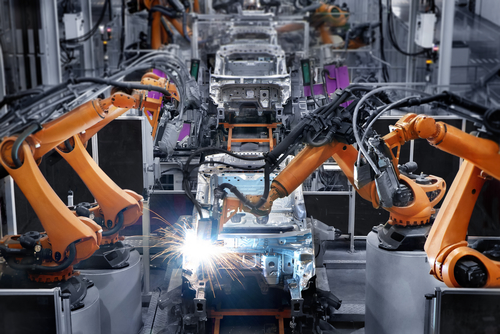
Routine manual jobs are on the way out.

You might have picked up on the news that the nature of the job market is changing.

Blogpost - Factory

Now, while it is true that the economy has always changed over time (for example, do you remember that Australia used to ride on the “sheep’s back”?) it seems that the rate of change is increasing.

And you can put that down to the impact of computers.

The impact of computers on jobs over the coming years was highlighted by Frey and Osborne in their 2013 “Future of Employment” study and CEDA, in their 2015 “Australia’s future workforce” report, further developed this understanding. However, the real discovery was by an MIT Economics Professor (David Autor). Through an investigation into the amount of human labour used by USA companies for jobs dominated by manual tasks, he found that demand for this type of labour had declined by about 10% over the 50 years from 1960.

Now, while companies were still producing things that required manual tasks, they require fewer men and women to do that manual work.

The impact is that some entry level jobs are lost and that jobs for the lower skilled are harder to find. It means that career choices must be made with more consideration.

So, for the student in your life, a clear-eyed consideration of the changing job opportunities must be paramount.


For more of what I have to offer, visit Dellium Advisory, follow on Twitter, connect using LinkedIn, review my IT Strategy blog, subscribe to my YouTube channel, or buy my ‘Jobs. Future. You.’ book.

The future of work and technology

2050 might be a bit too far away, but by gazing that far into the future we can see current trends, events and “signals” as perhaps harbingers of what may well become our lived experience.

The “Millenium Project”, gathers thoughts/intelligence/wisdom from over 3,500 futurists, scholars, business planners, and policy makers who work for organisations, governments, corporations, NGOs, and universities from across the globe.

A recent project looked at “Future Work/Technology 2050”. That is, what will the economy look like for our children and grandchildren?

They came up with three scenarios that are likely to occur.

To put this further into context, here is the background that the scenarios were based upon:

“Future artificial intelligence that can autonomously create, re-write, and implement software simultaneously around the world is a unique historical factor in job displacement” says Jerome Glenn, CEO of The Millennium Project, and adds that, “the Internet is also a historical factor in job creation. Information and means of production are far more open and distributed in the forthcoming biological and artificial intelligence revolutions than they were during the industrial revolution and the information revolution; hence, the frontiers for work may be greater than the information age revolution.”

Here are there three scenarios. Which one do you hope for, which one do you dread, which one do you think will happen?

  • 2050 Scenario 1: It’s Complicated – A Mixed Bag. A business-as-usual trend projection of the increasing acceleration of change with both intelligence and stupidity characterized decisionmaking. Irregular adoption of advance technology; high unemployment where governments did not create long-range strategies, and mixed success on the use of universal basic income. Giant corporation’s powers have often grown beyond government control, in this government-corporate, virtual-3D, multi-polar world of 2050.
  • 2050 Scenario 2: Political/Economic Turmoil – Future Despair. Governments did not anticipate the impacts of artificial general intelligence and had no strategies in place as unemployment exploded in the 2030s leaving the world of 2050 in political turmoil. Social polarism and political grid-lock in many forms have grown. Global order has deteriorated into a combination of nation-states, mega-corporations, local militias, terrorism, and organized crime.
  • Scenario 3: If Humans Were Free – the Self-Actualization Economy. Governments did anticipate the impacts of artificial general intelligence, conducted extensive research on how to phase in universal basic income systems, and promoted self-employment. Artists, media moguls, and entertainers helped to foster cultural change from an employment culture to a self-actualization economy.

Although it is a while away, if we look we can see the seeds of each of these tomorrows around us today.

For more of what I have to offer, visit Dellium Advisory, follow on Twitter, connect using LinkedIn, or review my IT Strategy blog, or subscribe to my YouTube channel.