Category Archives: Futurist

Digital Economy Series: “In a fully digital economy will you still be needed to work in a factory or sit at an office-desk?”

vehicles on road between high rise buildings
Photo by Craig Adderley on Pexels.com

Work. Whether we sit in an office, walk in a manufacturing facility, or perform some other task, those of us who work are living examples basic economic theory. We are all playing our part in turning an input into an output. We could be making sales calls to increase demand for an output, driving a truck to deliver raw materials, or even developing software to make the process better. Whether our organisation produces goods or services, we are all being paid to perform our part somewhere along the value chain.

The economy of tomorrow, the time when teenagers of today have teenage grandchildren, is more than likely to be a fully digital economy. For we can see evidence of this transition already. The value chain of decades ago was all about atoms, all about making and using physical goods. Today it is a mix of atoms and bits, it is an economy where value is created in the digital sphere as well as the physical sphere. Tomorrow the value chain may well be dominated by that which is digital.

Consider primary industries. Aren’t mines and farms becoming more automated? What about the secondary industries of manufacturing and construction, isn’t automation taking hold there as well? Even for higher value sectors such as finance, health and professional services we are witnessing inroads being made by either automated or intelligence-laden digital processes.

Thus it can be argued that there will be less employment in industry sectors that create value out of atoms. Indeed, even though the value of these sectors is growing across the OECD, related employment is largely stagnant.

But where is value created in the digital economy and what part do workers play in it? Value in the digital economy is created in the manufacture of ICT hardware, in the creation of software and services that use software, and in the collecting, processing and disseminating of data and information.

Regarding the manufacture of ICT hardware, it is not too hard to see full automation in production and logistics. But in the research, development and design phases we humans will still be critical for success.

Regarding the creation of software and software-based services, is it not too far fetched to contemplate software writing software? Where designers set the input and output requirements for new software or a new service, and the computer creates and tests the complete set of algorithms and interfaces.

Finally, regarding the management of data and information. Apart from employees performing regulatory oversight, it is possible to imagine the only other scenario in which human involvement is necessary is where faulty data collection sensors need to be replaced.

So, in this fully digital economy will you still be needed to work in a factory or sit at a desk in the office?

The answer is a qualified yes. While there are many factors that should be taken into consideration the foundational truth is that an economy is there to serve the society. For we grow things, we produce things, we teach things, we regulate things and so on for our individual and collective benefit.

Even though you may accept the propositions that 1. we are moving to an economy that is dominated by bits and, 2. just like production involving atoms has become more automated so too will bits-based production. We will still be human. Thus, even though what we value and how we pay for it will more than likely change, there will still be economic production to serve the needs of the population.

So yes, the factory will still be around to produce physical goods, but the types of work that are open to humans are those that are less automated. And yes, the office-desk job will still be around, but it too will involve non-automated people and thinking skills.

Therefore, even though what will be available and how it is produced will be different from today, basic economic theory will still apply. No matter the industry sector, in a fully digital economy people will still have roles as productive links somewhere in the value chain.


For more of what I have to offer, visit Dellium Advisory, follow on Twitter, connect using LinkedIn, review my IT Strategy blog, subscribe to my YouTube channel, or buy my ‘Jobs. Future. You.’ workbook.
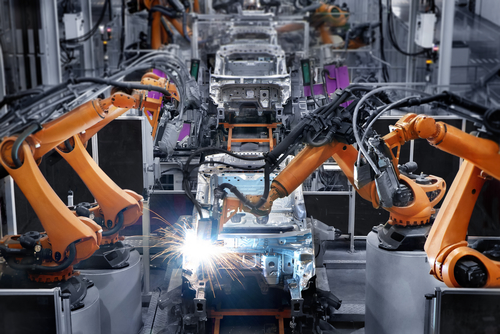
Routine manual jobs are on the way out.

You might have picked up on the news that the nature of the job market is changing.

Blogpost - Factory

Now, while it is true that the economy has always changed over time (for example, do you remember that Australia used to ride on the “sheep’s back”?) it seems that the rate of change is increasing.

And you can put that down to the impact of computers.

The impact of computers on jobs over the coming years was highlighted by Frey and Osborne in their 2013 “Future of Employment” study and CEDA, in their 2015 “Australia’s future workforce” report, further developed this understanding. However, the real discovery was by an MIT Economics Professor (David Autor). Through an investigation into the amount of human labour used by USA companies for jobs dominated by manual tasks, he found that demand for this type of labour had declined by about 10% over the 50 years from 1960.

Now, while companies were still producing things that required manual tasks, they require fewer men and women to do that manual work.

The impact is that some entry level jobs are lost and that jobs for the lower skilled are harder to find. It means that career choices must be made with more consideration.

So, for the student in your life, a clear-eyed consideration of the changing job opportunities must be paramount.


For more of what I have to offer, visit Dellium Advisory, follow on Twitter, connect using LinkedIn, review my IT Strategy blog, subscribe to my YouTube channel, or buy my ‘Jobs. Future. You.’ book.

The future of work and technology

2050 might be a bit too far away, but by gazing that far into the future we can see current trends, events and “signals” as perhaps harbingers of what may well become our lived experience.

The “Millenium Project”, gathers thoughts/intelligence/wisdom from over 3,500 futurists, scholars, business planners, and policy makers who work for organisations, governments, corporations, NGOs, and universities from across the globe.

A recent project looked at “Future Work/Technology 2050”. That is, what will the economy look like for our children and grandchildren?

They came up with three scenarios that are likely to occur.

To put this further into context, here is the background that the scenarios were based upon:

“Future artificial intelligence that can autonomously create, re-write, and implement software simultaneously around the world is a unique historical factor in job displacement” says Jerome Glenn, CEO of The Millennium Project, and adds that, “the Internet is also a historical factor in job creation. Information and means of production are far more open and distributed in the forthcoming biological and artificial intelligence revolutions than they were during the industrial revolution and the information revolution; hence, the frontiers for work may be greater than the information age revolution.”

Here are there three scenarios. Which one do you hope for, which one do you dread, which one do you think will happen?

  • 2050 Scenario 1: It’s Complicated – A Mixed Bag. A business-as-usual trend projection of the increasing acceleration of change with both intelligence and stupidity characterized decisionmaking. Irregular adoption of advance technology; high unemployment where governments did not create long-range strategies, and mixed success on the use of universal basic income. Giant corporation’s powers have often grown beyond government control, in this government-corporate, virtual-3D, multi-polar world of 2050.
  • 2050 Scenario 2: Political/Economic Turmoil – Future Despair. Governments did not anticipate the impacts of artificial general intelligence and had no strategies in place as unemployment exploded in the 2030s leaving the world of 2050 in political turmoil. Social polarism and political grid-lock in many forms have grown. Global order has deteriorated into a combination of nation-states, mega-corporations, local militias, terrorism, and organized crime.
  • Scenario 3: If Humans Were Free – the Self-Actualization Economy. Governments did anticipate the impacts of artificial general intelligence, conducted extensive research on how to phase in universal basic income systems, and promoted self-employment. Artists, media moguls, and entertainers helped to foster cultural change from an employment culture to a self-actualization economy.

Although it is a while away, if we look we can see the seeds of each of these tomorrows around us today.

For more of what I have to offer, visit Dellium Advisory, follow on Twitter, connect using LinkedIn, or review my IT Strategy blog, or subscribe to my YouTube channel.